
Leak Detection & Slab Leak Repair
Local | Reliable | Trusted
we service both home and businesses

Residential Services
From general services on faucets and pipes to replacing water heaters and septic repair, we can do it all.

Commercial Services
Our plumbing specialists can work with contractors of all sizes for small repairs to large scale installations.


Hidden leaks found and repaired under the slab, in the walls or in the yard, with the cost explained first.
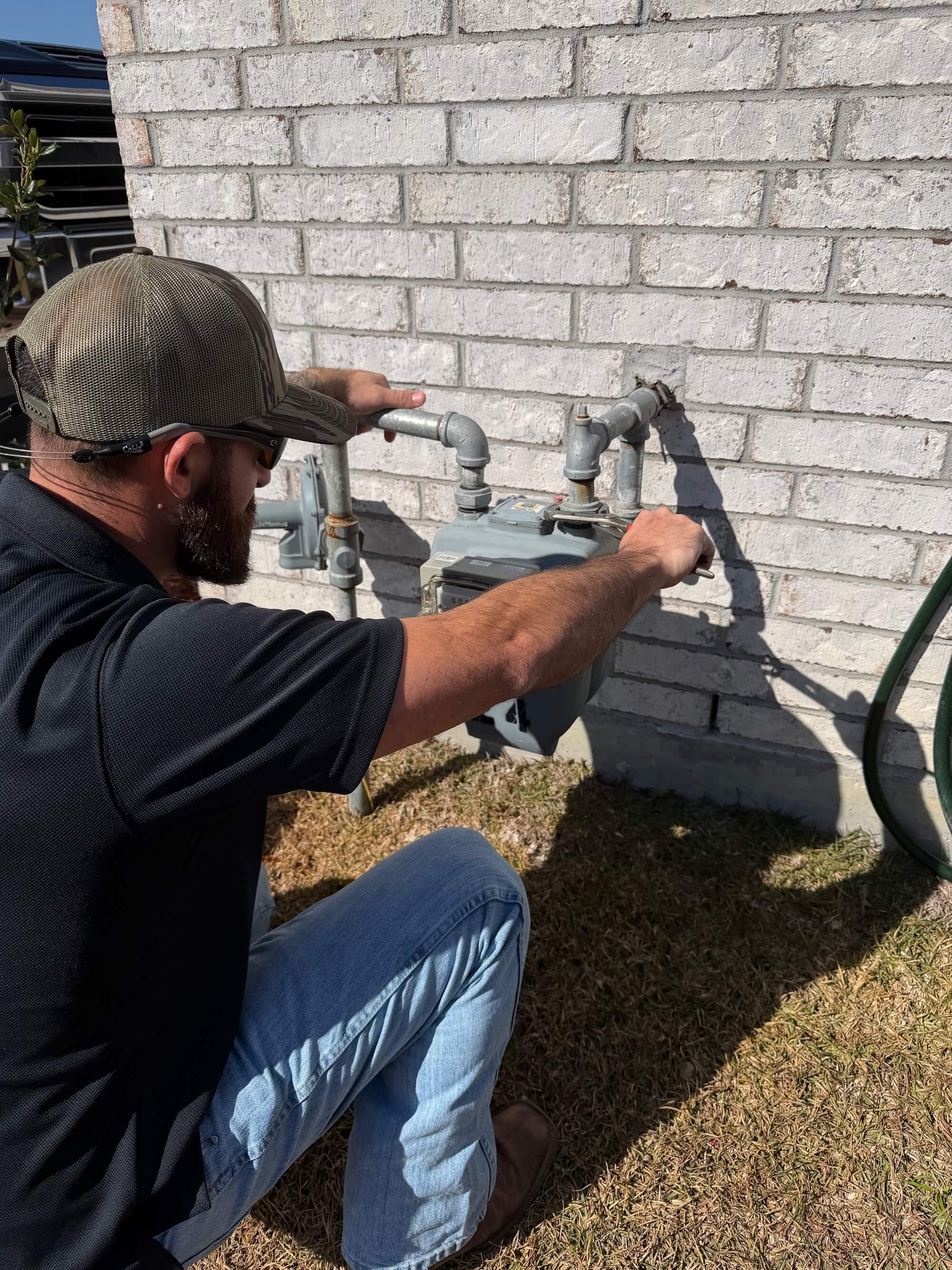
Some leaks are easy to spot. Others hide under a concrete slab, inside a wall or underground in the yard, running quietly until you get a high water bill or a soft spot in the floor. Drake Plumbing provides leak detection and slab leak repair for homes and businesses across the Northshore, from Hammond and Ponchatoula to Covington, Mandeville and Slidell. Our licensed plumbers find where the water is going, explain what it will take to fix and tell you the cost before any work begins.
Signs of a Hidden or Slab Leak
- A water bill that jumps without any change in how you use water.
- The sound of running water when every faucet and fixture is off.
- A water meter that keeps moving when nothing in the house is using water.
- Warm spots on a tile or concrete floor, which can mean a hot water line is leaking underneath.
- Damp carpet, warped wood flooring or loose tiles with no obvious source.
- Musty smells, mildew or mold along baseboards or walls.
A quick check you can do
Turn off every faucet and anything else in the house that uses water, then look at the water meter. If the dial or the small leak indicator is still moving, water is going somewhere. On a home with a private well, listen for the pump kicking on when no one is using water.
Why Slab Leaks Happen on the Northshore
Many homes here, especially in newer subdivisions, are built on concrete slabs with water lines running under or through the concrete. A few local conditions put those lines under stress:
- Clay soils. Clay swells when it's wet and shrinks during dry stretches. That movement shifts the slab and the ground around it, which can bend, rub or crack the pipes.
- Saturated ground. A high water table and heavy rain add to the soil movement around a foundation.
- Pipe wear. Lines that rub against concrete, gravel or each other as the house expands and contracts can wear thin. Hot water lines are especially prone to this.
- Aging pipe. Older galvanized and copper lines can corrode from the inside, and water chemistry, especially on private wells, can speed that up.
How We Find and Fix Leaks
- Confirm there's a leak. We start by checking the meter and the system to confirm water is being lost and whether the leak is on the hot side, the cold side or both.
- Narrow it down. We isolate and test sections of the plumbing to locate the leak as closely as we can before opening anything. The goal is to cut into as little floor, wall or yard as possible.
- Explain your options and the cost. Sometimes the best fix is a spot repair: opening the slab or wall at the leak and repairing that section of pipe. Other times, especially when a line has already leaked more than once, it makes more sense to reroute the line through the walls or attic and leave the old pipe under the slab out of service. We'll tell you the cost of each and what we'd recommend.
- Make the repair. We fix or reroute the line and test it to make sure it's holding.
If your home has had several leaks or the pipe is failing throughout, whole-house repiping may save you from chasing one leak after another. For leaks at a faucet, toilet or exposed pipe, see our general plumbing repairs.
When a Leak Is an Emergency
If water is pooling on the floor, coming through a ceiling or flooding the yard, shut off the main water valve and contact us. A leak near outlets or the electrical panel is a safety risk, so keep clear and turn off power to that area only if you can do it safely. Our emergency plumbing page has more on what to do while you wait. If the water is coming from the water heater itself, you may need water heater repair instead.
Leak Detection Across the Northshore
We find and repair leaks in homes and commercial buildings throughout Tangipahoa, St. Tammany and Livingston parishes. For local details, see our pages for a plumber in Hammond and a plumber in Mandeville.
Frequently Asked Questions
Will you have to break up my floor to fix a slab leak?
Not always. If a spot repair is the right fix, we'll need to open the floor at the leak, and we work to keep that opening as small as possible. If rerouting the line makes more sense, we can often bypass the slab entirely by running new pipe through the walls or attic.
Why did I get another slab leak after the first repair?
When one section of pipe under a slab fails, the rest of that pipe is often the same age and under the same stress. A second leak in a different spot is common. If you've had more than one, ask us about rerouting or repiping instead of another spot repair.
How soon do I need to fix a hidden leak?
Sooner is better. Even a small leak under a slab or in a wall keeps soaking the area, which can damage flooring, framing and the soil under your foundation and lead to mold.
Seeing signs of a hidden leak? Contact Drake Plumbing and we'll track it down and explain your options and the cost before we start.