
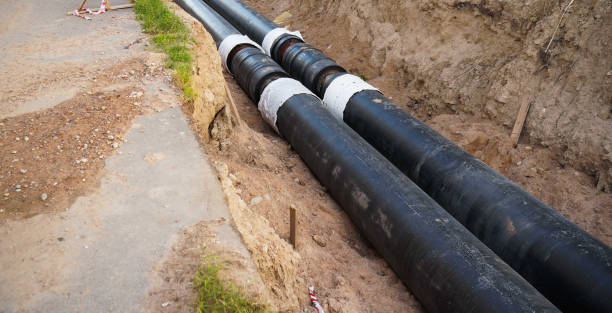
How Deep Are Gas Lines Buried? Everything Homeowners Should Know
When it comes to home maintenance and upgrades, a big question we get asked is: “How deep are gas lines buried?” As your trusted plumbing service provider, Drake Plumbing wants you to feel confident and safe about any digging or installations on your property. Here’s a clear, homeowner-friendly guide with no jargon and plenty of practical advice.
What Does the Phrase “How Deep are Gas Lines Buried” Mean in Your Yard?
When we talk about “how deep are gas lines buried,” we mean the vertical distance from the ground surface (or finished grade) down to the top of the pipe that carries fuel gas (often natural gas) into your home. That depth can vary depending on where the line is (in the yard vs. under driveway), what kind of line (service line vs. main line), and local building codes. Understanding that depth matters because knowing “how far down are gas lines buried” helps you avoid accidents when landscaping, installing fences, digging post holes, or adding outdoor structures.

Typical Depth Ranges – How Far Down are Gas Lines Buried?
Here’s a breakdown of common depths and what affects them:
- On private property, service lines (those running from the meter to your house) often sit around 18 to 24 inches deep.
- Main distribution lines (the larger pipes often running under streets or large easements) may be 24 inches or more deep.
- Some codes permit as little as 12 inches cover for certain residential supply piping if conditions allow. For example, the International Residential Code (IRC) allows 12 inches minimum depth for underground fuel gas piping, with exceptions.
- In special cases — such as high traffic areas, driveways, rocky soil or high-pressure distribution — the pipe may be buried even deeper than 24 inches.
So when asking “how deep are gas lines buried?”, the short answer: typically around 18–24 inches for most residential service lines, but always check your local code and site conditions.
Why the Depth Matters for Gas Line Installations
If the gas line is too shallow, a number of risks come into play:
- Risk of accidental damage when you dig post holes, install decking, or put in landscape lighting
- Ground shifts, frost heave, or erosion might expose or damage the line
- Potential liability and safety hazards if you disturb a buried line
- When we get a call for a repair where someone hit a line, that could’ve been prevented by knowing “how deep to bury gas line” or verifying existing depth
By following correct depth standards and using professional help, you reduce risks, protect your home and family, and avoid expensive mistakes.
How the Depth of Your Gas Line may Differ from Other Utilities
When homeowners ask “how far down are power lines buried compared to gas lines?”, here’s how they stack up in general (but always check your local code and your site).
- Power lines, especially lower-voltage residential cables, may be buried at shallower depths in some cases or run in conduit.
- Sewer, water, and large utility lines may require greater depth or additional protection depending on load.
- Gas lines carry flammable fuel, so following the correct depth helps protect that line from mechanical damage or excavation mishaps.
So comparing: gas lines typically deeper than simple communications/low-voltage lines, but perhaps similar or shallower than large water/sewer mains in some setups. The key point: you should not assume any utility’s exact depth without confirming it.
Factors that Influence How Deep to Bury Gas Line
Several conditions impact the “how deep are gas lines buried” answer for a specific home:
- Soil conditions: Rocky soil, sandy soil, or areas prone to erosion may require the pipe to be buried deeper or protected differently.
- Area of the driveway or road: If a line crosses a driveway or heavy-traffic lane, deeper burial or extra mechanical protection often applies.
- Frost line / freeze-thaw cycles: In colder regions, the depth of freezing may influence burying depth to avoid damage from ground movement.
- Local building code / utility company rules: Each municipality or utility may have different requirements. Some allow 12 inches under limited conditions, others require 24 inches or more.
- Type of pipe: Plastic (PE) vs. metal pipe may have different coverage or tracer requirements.
- Other utilities in the trench: If the gas line is installed with or near other utility lines (water, electric), horizontal and vertical separation requirements may affect depth and placement.
Given how many variables there are, when asking “how deep are gas lines buried at my home?”, the best move is to have a professional locate and verify them before you dig.
What Homeowners Should Do Before Digging
Since the exact depth can vary, here are safety steps to follow:
- Call 811 (or your local utility locate service). They provide free marking of underground utilities. Even if you know there’s a gas line, the marks could show how close you are.
- Have us at Drake Plumbing perform a locate or inspection if you plan to alter or extend a gas line. We can advise about “how deep to bury gas line” or check existing lines.
- Hand dig (or carefully dig) when you approach marked utilities. Even once marked, you should assume the pipe could be shallower or deeper than expected due to ground shifts or previous work.
- Avoid heavy machinery directly above a known gas line without verification. If a pipe lies under a driveway or heavy load zone, additional protection may be required.
- Document and clearly mark any changes or new installations. If you or a contractor installs a new line (for example, for a grill or outdoor kitchen), ask “how deep to bury gas line” ahead of time, and make sure the work meets code.
- If you suspect you hit or damaged a gas line, stop work immediately and call us for help. Even minor damage can lead to leaks or worse.
What if You’re Installing a New Line or Adding to your Gas System?
When adding a new outlet, built-in grill, fire pit, or extending service, you’ll want to keep these in mind:
- Confirm with local code how deep that new line must be buried (on your lot, crossing driveway, under patio, etc.).
- Ask “how deep to bury gas line” in your specific area and for that application.
- Ensure the installer uses visible tracer wire if plastic pipe is used, and proper mechanical protection if required (which helps future locals know where the line lies).
- Make sure the trench is backfilled properly, without large rocks pressing on the line, and compaction is appropriate so future erosion doesn’t expose the pipe.
- Once installed, maintain records of the run and depth. That helps for future landscaping or other work.
Summary
For most residential service lines, you’ll find them around 18 to 24 inches deep, but actual depth depends on local code, soil, traffic load, and utility layout. Larger main lines will often be deeper. When preparing for any digging, ask “how far down are gas lines buried?” on your lot, get the lines located, then dig carefully. At Drake Plumbing, we’re ready to help you with locating, installing, or repairing gas lines so your project proceeds safely and correctly.
Why Choose Drake Plumbing for Gas Line Installations?
As your local experts in and around St. Tammany Parish, Madisonville, Mandeville, Covington, Hammond, and Ponchatoula, we bring professional experience to every job:
- Service in St. Tammany Parish: trusted plumber in St. Tammany Parish
- Service in Madisonville, LA: trusted plumber in Madisonville
- Service in Mandeville, LA: trusted plumber in Mandeville
- Service in Covington, LA: trusted plumber in Covington
- Service in Hammond, LA: trusted plumber in Hammond
- Service in Ponchatoula, LA: trusted plumber in Ponchatoula
When you have questions about how deep are gas lines buried, or you’re planning a gas line installation or repair, give Drake Plumbing a call at (985) 703-0477, or visit our contact page. We’ll schedule an inspection, locate your lines, help you plan safely, and get the job done right.
Don’t wait until the shovel hits something you didn’t see—reach out now and protect your property and your peace of mind.
Frequently Asked Questions
Q: Can I assume the gas line is always buried 18-24 inches
A: No. That is a common range for residential service lines, but actual depth can vary depending on your local code, soil, and site conditions. Always check the markings and call before digging.
Q: If my neighbor’s line is at 24 inches, does mine have to be the same?
A: Not necessarily. Each property may have different conditions and local utility/municipality rules. The depth could differ for your lot.
Q: How deep are power lines buried compared to my gas line?
A: It depends on the voltage and local rules, but often low-voltage electric cables may sit at shallower depths than a gas service line. However, major power conduits can be quite deep. Do not assume either utility is shallower or deeper without locate markings.
Q: What happens if I dig and hit a gas line?
A: Stop work immediately, evacuate the area if necessary, and call your utility and us at Drake Plumbing. Damaging a line can lead to leaks, fire, interruption of service, and liability.
Q: Why don’t I always see warning tape above the buried line?
A: Many older installations may not include modern detection/tracer systems. Soil shifts and grading can also bury or expose utilities unexpectedly. That’s why marking services are important before digging.

